
Over the last century the way natural history and earth science collections are displayed is beginning to change. Some are starting to change their attitudes and concerns to address issues today. For example, some museums are using their collections to help address the biodiversity crisis.
Museums are going about this in very different ways from subtle changes within a traditional gallery to temporary exhibitions pulling in new and existing visitors.
Below are examples of a largely ‘traditional’ museum as a baseline along with two more museums that have adapted in completely different ways to help address this issue.
Leicester Museum and Art Gallery
Leicester Museum and Art Gallery, holds a fossil gallery and a wildspace gallery. The fossil gallery consists of dinosaurs, marine reptiles and more. These include local fossil finds as well as examples from the wider area. The wildspace gallery consists of taxidermized animals arranged geographically. For example, all the animals from Africa are all together.
This is a very traditional way of displaying natural history specimens and has been around since exhibitions of these collections have existed. This method is still relevant though and important as these collections are still available for research and still teach visitors about the natural world.
Bristol Museum’s ‘Extinction Voices’ Intervention
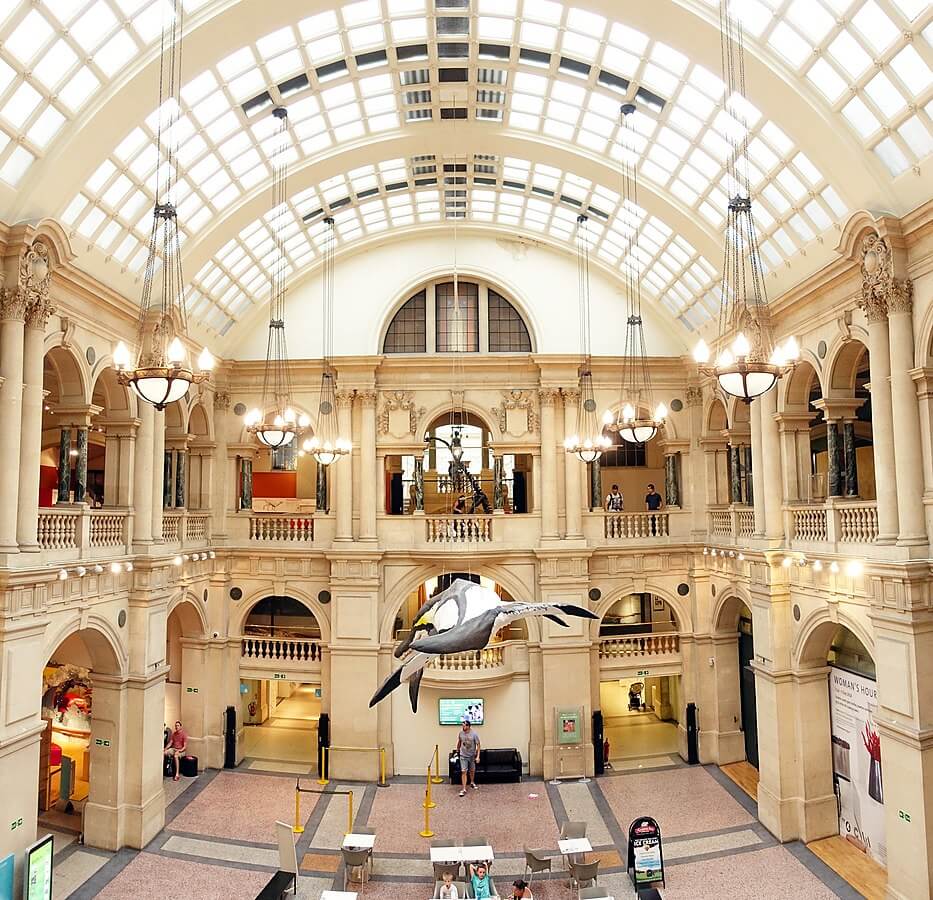
Bristol Museum’s wildlife gallery shows that small changes to a ‘traditional’ gallery to enhance the aspect of extinction amongst species can have a big impact on how visitors view the displays.
Bristol’s museums wildlife gallery is an example of a museum with a very traditional wildlife gallery, displaying its taxidermized animals by biogeography and habitats. This arrangement dated back to the 1940s. The display also explored “the causes of modern extinction and why we have animal specimens” (Gladstone and Pearl, 2022, p 51-52), However extinction is displayed as a ‘natural process’.
In 2019 the gallery was part of an intervention named ‘Extinction Voices’. Which was a low-cost project to highlight the current crisis of extinction and biodiversity loss.
The intervention took place after a group of school children visited the museum and saw the exhibit with a tiger. A few of the children laughed at it. Later they learned about the specimen’s history and how tigers are under threat. They wrote a total of 31 letters to the museum asking if more of this important information could be displayed. One example being “Does it not bother you that tiger numbers are dropping rapidly, and your museum is doing nothing to help” (Gladstone and Pearl, 2022, p 53).
It was decided that all threatened species would be covered with a black veil, this was to represent the losing of sight. Oversized labels were put alongside specimens with the International Union for Conservation of Nature (IUCN) status, “extinct, critically endangered, endangered or vulnerable” (Gladstone and Pearl, 2022, p 54). Within the centre of the gallery a tree was placed and named the ‘Extinction tree’. It aimed to build conversion for visitors, for them to add leaves with thoughts and actions.
Visitors found the intervention impactful with many not realising the extend of animals that are in danger (Gladstone and Pearl, 2022, p 54).
This is a good example of how a natural history collection has changed slightly to address the current biodiversity crisis. The original (and traditional) layout of the gallery is still present, displaying species by region and teaching about habitats. But a subtle change of making animals that are, extinct or endangered more evident and creating the visual perception of disappearing through the veils, brings the details of being endangered and extinct brings the galleries attitudes and concerns more to the present and future.
This shows how a small, low cost and low impact method can have a big impact on how visitors see the exhibits. More natural history exhibits have the potential to take this direction. However, it took the voices and letters of a group of school children to make an impactful change to the gallery.
Peterborough Museum and Art Gallery
Peterborough Museum and Art Gallery held a temporary exhibition called ‘Extinction’ from 26th June till 6th November 2022. The exhibition highlights past extinction events (such as the dinosaurs) to lead on to more recent extinctions, caused by humans, to what is happening today.
The exhibition starts of at looking at extinctions in the past, starting with the dinosaurs and marine reptiles. It has a poster about the big five extinctions, it moves on to the ice age. Then on to the global extinctions and explains why animals go extinct, with a section on wildlife trade and wildlife and the law (Peterborough, 2022). The exhibition also holds a section on climate change and the threat to our oceans with a display case with coral and shells surrounded by plastic waste (Barnes, 2022). It talks about local extinction with butterfly’s and a bit on zoos and conservation work. It ends with information on local reintroductions and a section of ‘what can you do, with children’s posters from a local primary school (Peterborough, 2022) (see figure 3). It can be seen this exhibition is very focused and reflects the attitudes and concerns of the present and future.
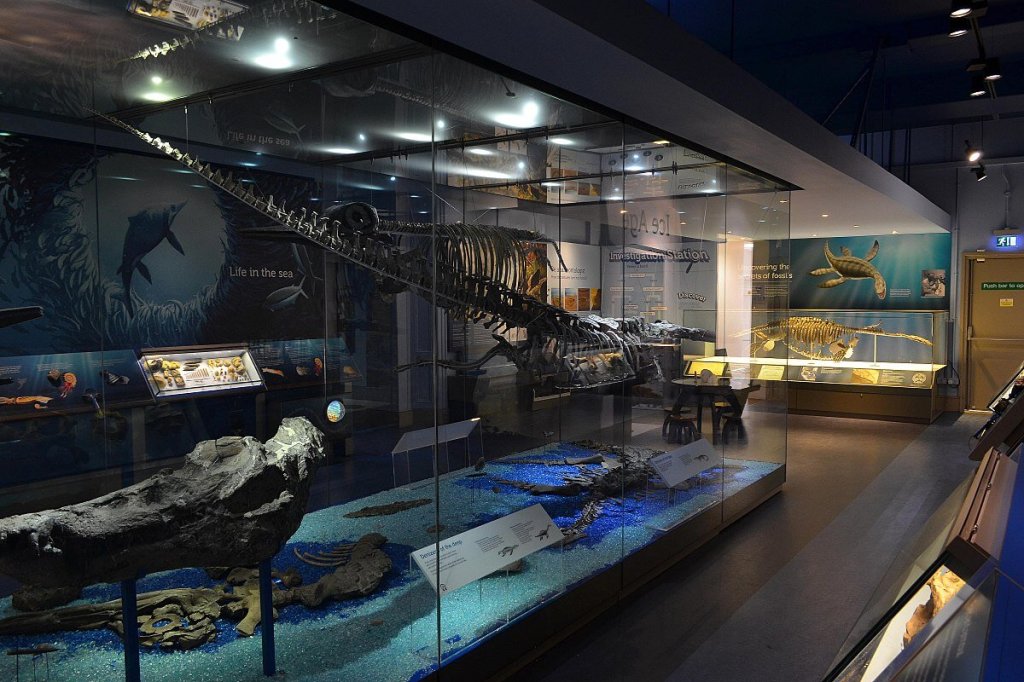
The permeant exhibits are ‘traditional’. The natural history collections are split between the Jurassic Seas (marine reptiles and fossils from the local area), Ice Age (ice age specimens from the local gravel pits) and the Wildlife Gallery (examples of animals you could find in the local area and your back garden) (Peterborough, 2022) (see figure 2). These exhibits, while not discussing current issues, are very relevant to the locals and tourists as they show what fossils can be found in the local area and what the environment was like millions to thousands of years ago. The wildlife gallery is relevant as its showing what wildlife can be found within the local nature spots as well as your back garden, educating visitors what to look for whilst out and about or at home as well as hopefully getting them interested in what nature is around them and therefore will want to look after it.
The temporary exhibition used the method of looking at extinction through time, which would have attracted a wider audience, for example those interested in dinosaurs and prehistoric life may have visited the exhibition that might not of if it was just on extinctions and the climate crisis happening today. As well as attracting visitors interested and want to learn more about extinction, climate change and conservation.
Summary
It can be seen from these examples that whether a museum is making changes, their collections and displays are still very important in education and research. Many large collections can serve as baseline to establish the loss of biodiversity over time.
A very small change can also have a big impact on visitor’s experience, as seen in Bristol. Hopefully this will lead to similar interventions in other museums.
References
Barnes B. (2022) ‘New exhibition at Peterborough Museum explores extinction’, Peterborough Telegraph, 11 July, Available at: https://www.peterboroughtoday.co.uk/whats-on/things-to-do/new-exhibition-at-peterborough-museum-explores-extinction-3763811?page=1 (Accessed: 17 October 2022).
Carlins C. (2015). A Natural Curiosity: Evolution in the display of natural history museums. Journal of Natural Science Collections. 2. pp 13-21.
Gladstone I, Pearl P. (2022). Extinction Voices, Extinction Silences: Reflecting on a Decolonial Role for Natural History Exhibits in Promoting Thinking about Global Ecological Crisis, Using a Case Study from Bristol Museums. Museum and Society, 20(1).
Museum and Art Gallery (2022) Peterborough Museum and Art Gallery: Our Galleries. Available at: https://peterboroughmuseum.org.uk/our-galleries (Accessed: 17 October 2022).
Novacek. M. J, Goldberg. S. L. (2013) ‘Museums and Institutions, Role of’. Encyclopaedia of Biodiversity (Second Edition). p 404-420
Peterborough (2022) Available at: https://www.visitpeterborough.com/whats-on/extinction-p1745751 (Accessed: 17 October 22)
The Trustees of The Natural History Museum, London (2022) Natural History Museum: Our vision and strategy. Available at: https://www.nhm.ac.uk/about-us/our-vision-strategy.html (Accessed: 17 October 2022)
University of Oxford (2022) Development Office: Giving to the Museum of Natural History. Available at: https://www.development.ox.ac.uk/museum-natural-history – :~:text=The%20Museum’s%20mission%20is%20to,engagement%20of%20the%20highest%20quality. (Accessed: 19 October 2022).
 fossil Journeys
Leave a comment