
MSc Museum Studies Dissertation (2023)
The Impact of Digitisation on Access to Palaeontological Collections
(Not Published)
Abstract
Digitisation and online collections are starting to become more and more important within museums and the research community. This is a new form of access which allows people to see collections from anywhere. But does this improve access to palaeontological collections? Can it replace seeing the specimen in person?
Within this study, an evaluation of online databases took place, 16 were looked at were rated against seven criteria. This included user friendliness, amount of information and how accessible the information was. Alongside this a total of six museums were interviewed, they were asked how and why they have or have not got their collection online, who it is for and how people are using them. A survey was sent out through three separate palaeontology organisations (PALASS, GCG, PGPG), to see how people from non-professionals to professionals use online collections within their day-to-day life’s.
The results showed the NHM online collection carried the most information and was most accessible to different groups, with highlight pages but was not very user friendly. Interviews and surveys showed that online collections are focused on access researchers. This allows important and unknown fossils to be found but this means the online collections are not accessible outside of researchers, but there is a need/want them to be more accessible.
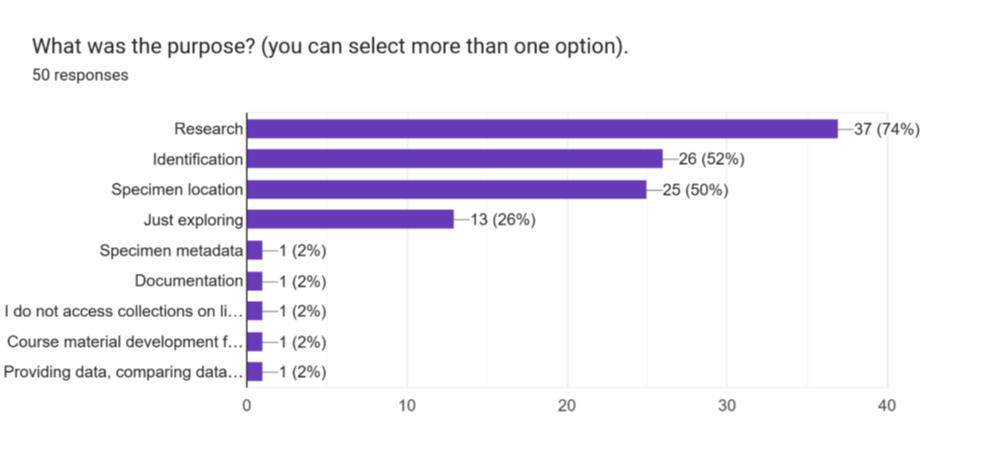
In conclusion, digitisation does improve access to palaeontological collections, but only to a small portion of the community. The online collections are not accessible to non-professionals. They are mainly used for research, specimen location and identification.
BSc (Hons) Palaeontology Dissertation (2022)
Analysis of a Partial Plesiosaur Paddle (Cryptoclidus) from the Oxford Clay Formation (Callovian, Middle Jurassic), Peterborough.
(Not Published)
Abstract
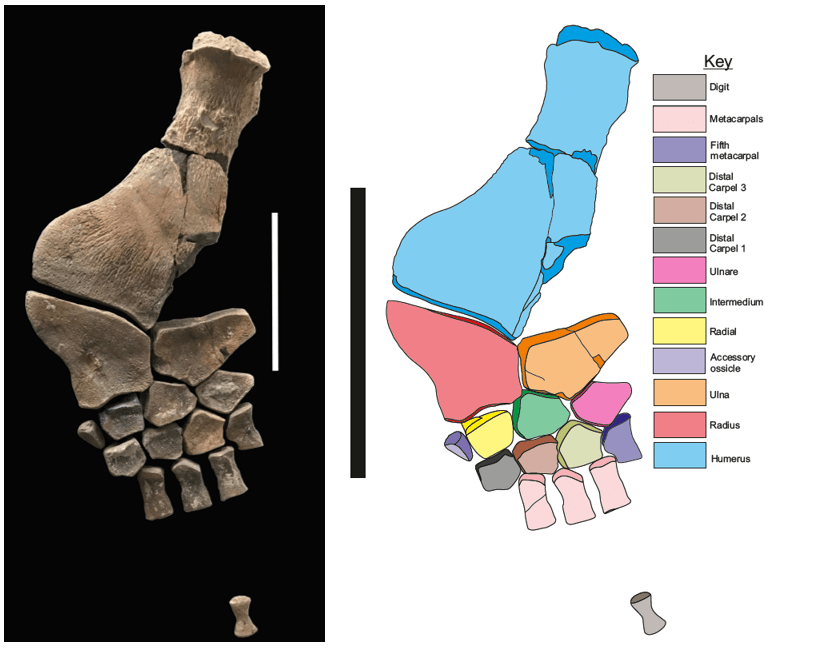
A partial paddle from a plesiosaur was provided from the University of Portsmouth from the Oxford Clay of Peterborough. The Oxford Clay itself stretches across the UK from Yorkshire to Weymouth and ranges from the uppermost Lower Callovian to the top of the Lower Oxfordian. During the Jurassic period this area would have been a warm tropical ocean filled with life, from marine reptiles and fishes to ammonites and belemnites. Comparison with the literature and museum material identified the specimen as Cryptoclidus eurymerus, one of the most common plesiosaurs to find within this formation. An estimate of the overall size was determined based on ratios from complete specimens, and it was concluded the overall length of the specimen was 3.1/2 meters. The taphonomy of the specimen was investigated based upon encrusting bivalves discovered on the bones. It was determined the specimen did not die from old age as its ontogeny was not complete. There are not any signs of predation or disease (although this could be present on parts of the skeleton not obtained), therefore the cause of death remains unclear. The presence of encrusters indicate the bottom waters were oxic and the substrate was firm enough to support the bones for some time. Encrusters are present on all sides of the bones indicating they became scattered, it was concluded this was likely due to several factors including, predation/scavenging, reworking, and possible storm activity. Locomotion was briefly investigated; it is mostly agreed that plesiosaurs swam using a form of underwater flight. With their primary limb movements being dorso/ventral and their strongest movement being the downstroke, with their locomotion being lift based. Muscle attachment sites can be seen on specimen OCPAR1, but it was determined the specimen was too incomplete to conclude the mode of locomotion.
 fossil Journeys